


Your Spouse Wants a Divorce. What Should You Do in the First 48 Hours?


“I want a divorce.”
Four words that can change everything.
Maybe you saw it coming.
Maybe you thought your marriage was going through a difficult period, but you never expected your spouse to say they wanted to end it.
Or maybe the conversation came completely out of nowhere.
Now your mind is racing.
Should I move out?
Should I take money out of our joint accounts?
What happens to our house?
What about the children?
Do I need to hire a divorce attorney immediately?
The first 48 hours after learning that your spouse wants a divorce can feel overwhelming.
But this is also a time when emotional decisions can create financial and legal complications that may be difficult to undo.
In Illinois, divorce involves important decisions about property, finances, parenting responsibilities, child support, and sometimes spousal maintenance.
Before you make major changes, take time to understand your situation.
Here are practical first steps to consider.
1. Don't Make Major Decisions in the Middle of an Emotional Conversation
When your spouse announces they want a divorce, your first reaction may be anger, fear, sadness, or disbelief.
You may feel pressured to respond immediately.
Your spouse might say:
“I want you out of the house.”
“We'll just split everything 50/50.”
“I'll keep the house, and you can keep your retirement.”
“Let's agree on everything now so we don't need lawyers.”
But you do not have to resolve your entire divorce during one conversation.
You may not yet understand the full financial picture or how Illinois law applies to your circumstances.
Avoid making promises about property, debts, parenting arrangements, or financial support before obtaining appropriate advice.
You can acknowledge that your spouse wants a divorce without agreeing to every proposed term.
2. Don't Automatically Move Out of the Marital Home
One of the first questions people ask is whether they should leave the house.
The answer is not always simple.
Moving out does not automatically mean that you give up your ownership interest in the property.
However, leaving the marital home can create practical complications involving parenting schedules, household expenses, access to important documents, and living arrangements.
Before moving, consider:
Who owns the property?
Whose name is on the mortgage or lease?
Can you afford a separate residence?
Where will the children live?
How will parenting time be handled?
Who will continue paying the household expenses?
Will you still have access to your financial records and personal belongings?
If there are safety concerns, those circumstances may require a different and more immediate response.
But if your spouse is simply demanding that you leave, do not assume that demand automatically creates a legal obligation to move out.
Speak with an Illinois family law attorney before making a significant housing decision whenever possible.
For more information, read our related article, “Should I Move Out of the House Before Filing for Divorce in Illinois?”
3. Review Your Financial Situation Before Moving Money
Financial concerns often become immediate when a marriage begins to break down.
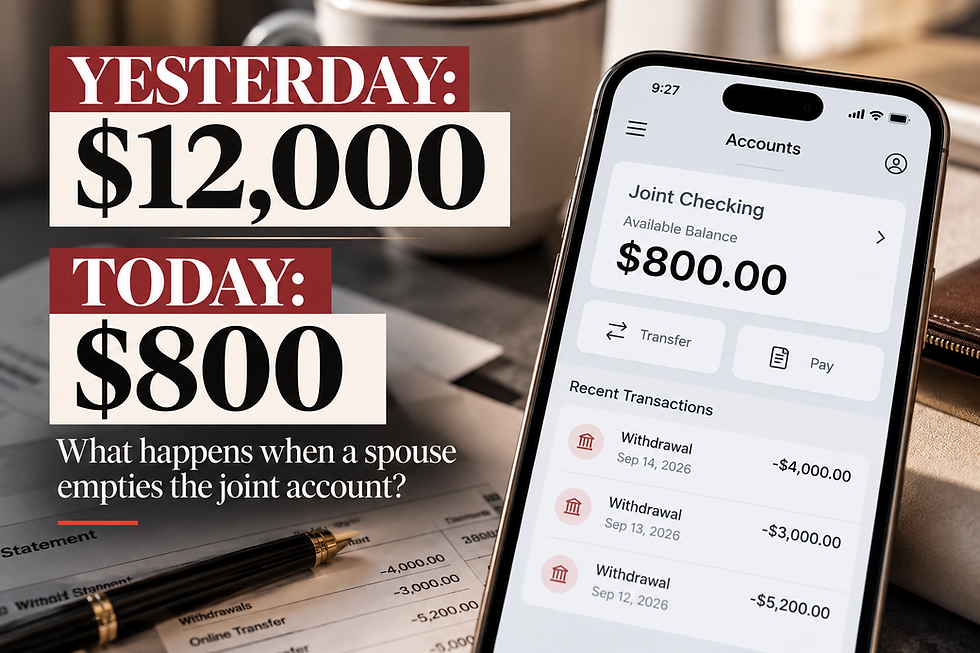
You may worry that your spouse will empty a joint account, stop contributing to household expenses, or restrict your access to money.
Those concerns should not be ignored.
But reacting by immediately withdrawing all available funds or transferring money into another account can create additional problems.
Illinois law generally presumes that property acquired during the marriage is marital property unless a statutory exception applies.
The treatment of money in a bank account may depend on where it came from, when it was acquired, and other circumstances.
Before making substantial financial changes:
Review your joint and individual account balances.
Identify upcoming household expenses.
Determine which bills are automatically paid from shared accounts.
Document recent transfers or withdrawals.
Preserve account statements you can legally access.
Avoid hiding or transferring assets to prevent your spouse from accessing them.
Seek legal guidance if you believe money is being concealed or dissipated.
There is an important difference between using available funds for legitimate living expenses and moving money to prevent it from being considered in a divorce.
If your spouse has already withdrawn a substantial amount of money, document what happened and seek advice before retaliating.
For more information, read “What Happens If My Spouse Empties Our Joint Bank Account Before Divorce in Illinois?”
4. Start Gathering Important Financial Documents
You do not need to know exactly how every asset will be divided during the first 48 hours.
But understanding what exists is an important starting point.
Begin gathering copies of financial records you are legally entitled to access.
These may include:
Recent bank statements
Tax returns
Pay stubs and other income records
Mortgage statements
Home equity loans or lines of credit
Credit card statements
Retirement and pension account statements
Investment account statements
Life insurance information
Vehicle loan documents
Business ownership or financial records
Information about outstanding debts
Prenuptial or postnuptial agreements, if applicable
You should also make a list of major assets and debts, even if you do not yet have every statement.
Illinois divorce proceedings may require detailed financial disclosures concerning income, expenses, assets, and liabilities.
Starting with accurate records can make that process easier.
Do not access accounts or documents unlawfully, guess passwords, or attempt to obtain information you are not authorized to access.
If records are unavailable, an attorney can explain how relevant information may be obtained through the legal process.
5. Understand Your Current Household Expenses
Divorce often means one household will eventually become two.
That transition can be expensive.
Before agreeing to move, take on additional bills, or change financial arrangements, understand what your household currently costs.
Write down expenses such as:
Mortgage or rent
Utilities
Groceries
Insurance
Car payments
Transportation
Childcare
School expenses
Medical expenses
Credit card and loan payments
Other recurring obligations
Also identify your sources of income and which expenses your spouse currently pays.
This information can help you understand your immediate financial needs and prepare for discussions about temporary financial arrangements.
In an Illinois divorce case, temporary relief may be available in appropriate circumstances to address certain financial and family-related issues while the case is pending.
You do not necessarily have to resolve every long-term financial question before addressing immediate needs.
6. Be Careful About Making Changes Involving Your Children
If you have children, the announcement of a divorce may create immediate questions about where they will live and how they will spend time with each parent.
You may feel tempted to establish a new parenting schedule right away.
But major changes involving children should be approached carefully.
Consider:
What is the children's current daily routine?
Who handles school transportation?
Who attends medical appointments?
What are the children's extracurricular schedules?
How have both parents participated in their care?
Are there existing parenting or court orders?
Are there any legitimate safety concerns?
Try to preserve stability for your children while the adults work through the legal issues.
Avoid asking children to choose sides or involving them in disagreements about the divorce.
Do not assume that the parent who files first automatically receives greater parenting rights.
Illinois courts determine parenting arrangements based on the applicable legal standards, including the children's best interests.
If there are existing parenting orders, those orders should not be disregarded simply because one parent wants different arrangements.
7. Preserve Important Communications
When a marriage is ending, conversations can become emotional.
Text messages, emails, and other communications may later become relevant to disagreements involving finances, parenting, or other issues.
If your spouse has made statements about selling property, withholding money, moving with the children, or refusing to pay expenses, preserve relevant communications you are legally entitled to keep.
At the same time, be careful about what you send.
Avoid:
Threatening messages
Insults or personal attacks
Repeated angry texts
Public accusations on social media
Statements intended to intimidate your spouse
Discussing adult disputes through your children
You do not need to win an argument by text message.
Communicate clearly, remain factual, and avoid creating unnecessary conflict.
Also, do not secretly record conversations without first understanding applicable recording and privacy laws.
8. Don't Sign Agreements Just to Keep the Peace
Some couples begin discussing settlement terms before either spouse has spoken with an attorney.
Your spouse may suggest an informal agreement about the house, bank accounts, parenting time, or financial support.
They may tell you:
“We already know what belongs to each of us.”
“This is fair. Just sign it.”
“We don't need to involve attorneys.”
But what seems fair during an emotional conversation may not reflect the full financial circumstances or your legal rights.
Before signing an agreement, ask yourself:
Do I know the value of our major assets?
Do I understand our debts?
Have I reviewed retirement accounts?
Do I know whether property is marital or non-marital?
Have we addressed parenting and support issues?
Do I understand the legal effect of what I am signing?
Not every informal conversation creates an enforceable agreement.
However, signing legal or financial documents without understanding their consequences can create significant complications.
Obtain legal advice before signing documents that may affect your property, finances, or parenting rights.
9. Write Down Your Most Important Questions
When you are overwhelmed, it can be difficult to remember everything you need to ask.
Take a few minutes to create a list.
Your questions might include:
About the home:
Can my spouse make me leave? Can either of us afford to keep the house?
About money:
How will we pay the bills? What happens to joint accounts, retirement savings, and debts?
About the children:
How will parenting time work? What happens if we disagree?
About the divorce process:
Do I need to file first? How long might the process take? What happens if my spouse has already hired an attorney?
About immediate protection:
What should I do if my spouse is moving money, threatening to sell property, or refusing to contribute to necessary expenses?
Having your questions organized can make your first attorney consultation more productive.
You do not need to know every answer before seeking help.
That is one of the reasons to speak with an attorney.
10. Speak With an Illinois Divorce Attorney Before Making Major Changes
You do not necessarily need to file for divorce immediately because your spouse says they want one.
But getting legal advice early can help you avoid decisions that may complicate your situation.
An Illinois divorce attorney can help you understand:
The divorce process
Your rights concerning the marital home
Marital and non-marital property
Financial disclosure requirements
Parenting responsibilities and parenting time
Child support and maintenance
Temporary court orders
Financial concerns requiring prompt attention
What documents and information to gather
An attorney can also help you distinguish between matters that require immediate action and issues that can be addressed as the divorce progresses.
Getting legal advice does not mean you have to make every decision that day. It means you can begin making informed decisions.
What If My Spouse Has Already Filed for Divorce?
If your spouse has already filed, the situation may require more immediate attention.
Review any documents you have received carefully.
Do not ignore a summons, petition, notice of hearing, or other court paperwork.
Court documents may contain deadlines or hearing dates that require a response.
Failing to respond appropriately can have legal consequences.
Contact an Illinois family law attorney promptly to understand the documents, applicable deadlines, and your options.
What If There Is Abuse or an Immediate Safety Concern?
Not every divorce begins with a calm conversation.
If there are threats, domestic violence, stalking, intimidation, or concerns about the safety of you or your children, immediate protection may be more important than following a general 48-hour checklist.
In an emergency, call 911.
Depending on the circumstances, protective orders and other legal remedies may be available.
An attorney or appropriate domestic violence service provider can help you understand your options.
Do not delay necessary safety measures simply because you have not yet gathered financial documents or scheduled a divorce consultation.
Your First 48 Hours: Focus on Information, Not Panic
When your spouse says they want a divorce, it can feel as though everything must be decided immediately.
But the first two days do not have to determine the outcome of your divorce.
Instead, focus on what you can reasonably control.
Pause before making major decisions.
Preserve financial records.
Understand your household expenses.
Maintain stability for your children.
Document important concerns.
Avoid impulsive financial or legal agreements.
Get legal advice before taking steps that may be difficult to reverse.
Divorce can involve difficult decisions, but those decisions should be based on accurate information and an understanding of your rights — not simply the emotions of the moment.
Talk With an Illinois Divorce Attorney About Your Next Steps
If your spouse has told you they want a divorce, you may be unsure what to do first.
You do not have to make major decisions about your home, finances, or children without understanding your legal options.
Larimer Law LLC provides clear, practical, and strategic family law guidance to clients navigating divorce, property division, parenting responsibilities, child support, maintenance, and related family law matters in Illinois.
Whether you are considering divorce, responding to your spouse's decision, or facing immediate financial or parenting concerns, obtaining legal advice can help you move forward with greater clarity.
Contact Larimer Law LLC at 773.902.0200 or email paralegal@larimerlawllc.com to schedule a free consultation.
Disclaimer: This article is for general informational purposes only and does not constitute legal advice. Every family law matter is different. Consult a qualified Illinois family law attorney about your specific circumstances.


Comments